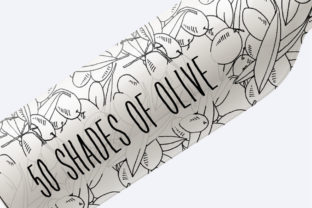
50 Shades of Olive Hand Drawn
The 50 Shades of Olive Hand Drawn Illustrations Mega Pack is a curated digital asset collection featuring 50 original, hand-crafted illustrations centered on olives and olive branches. Created using traditional media—ink, graphite, and watercolor—the pack delivers varied textures, line qualities, and tonal ranges. Each illustration is digitized at high resolution and provided in both PNG (with transparent background) and JPG formats, supporting flexible use across design workflows.
What This Collection Offers—and What It Doesn’t
This pack contains 50 distinct illustrations, organized by medium and output type: 10 ink-based pieces, 20 graphite drawings, and 20 watercolor compositions. Within those groupings, files are delivered in multiple configurations—for example, watercolor illustrations appear as 10 PNGs with transparency, 10 JPGs, and an additional 10 PNGs and 10 JPGs (likely reflecting alternate versions or scales). The inclusion of pattern-based assets—10 transparent-background patterns and 10 16×16 JPG pattern tiles—adds utility for repeat applications like labels or wrapping paper.
It does not include vector files, editable source layers (e.g., PSD or AI), licensing for resale of standalone artwork, or custom illustration services. The pack is intended for designers and brands seeking ready-to-use, tactile-feeling botanical assets—not scalable vectors or bespoke creative development.
Who Might Benefit Most
Designers working on olive oil packaging—especially small-batch, artisanal, or premium-branded products—may find this pack especially relevant. The organic quality of hand-drawn ink linework, the soft grain of graphite, and the subtle granulation of watercolor align well with markets that emphasize authenticity, craft, and Mediterranean heritage. Because all files are high-resolution and include transparent backgrounds, they integrate cleanly into label templates, bottle sleeve mockups, or website banners without extensive post-processing.
Brands launching limited editions, seasonal variants, or gift sets may also benefit. The variety across media allows for visual differentiation between product lines—for instance, using ink illustrations for a bold, classic range and watercolor versions for a lighter, spring-themed release. The pattern tiles further support cohesive shelf presence through consistent background textures on secondary packaging or promotional materials.
Practical Considerations Before Use
File organization matters. The pack includes overlapping file types (e.g., watercolor illustrations appear in both PNG and JPG, sometimes twice), which may require careful naming or folder structuring to avoid confusion during production. Designers should verify dimensions and DPI requirements for their specific print vendor—while files are described as “high-resolution,” exact pixel dimensions aren’t specified in the source description, so spot-checking is advisable before final layout.
Transparency support varies by format: PNG files retain alpha channels, but JPGs do not. If layering over colored substrates or gradients is part of the design system, relying on JPGs alone could necessitate manual masking or background recreation. Also, because all illustrations are hand-drawn—not algorithmically generated or stylized via filters—they exhibit natural variation in stroke weight, density, and composition. That’s a strength for authenticity but may require extra time to ensure visual consistency across a full packaging suite.
When Alternatives May Be Worth Exploring
If scalability is essential—for example, for large-format signage, embroidery digitizing, or responsive web graphics—vector-based olive illustrations would offer sharper rendering at any size. Similarly, if brand guidelines demand strict color control (e.g., precise Pantone matching across all assets), hand-drawn watercolor scans may introduce slight pigment shifts between files, requiring manual color correction.
For teams needing tightly coordinated icon systems—such as olive-related symbols for certifications (organic, cold-pressed, PDO), origin maps, or harvest timelines—a custom illustration set built to spec may provide better functional alignment than a thematic but general-purpose pack. Likewise, if usage extends beyond packaging into motion graphics or interactive media, static raster files lack the flexibility of SVG or Lottie-compatible assets.
Evaluating Fit Against Your Goals
Ask yourself three questions before selecting the 50 Shades of Olive Hand Drawn pack:
- Is tactile, artisanal visual language central to your brand expression? If yes, the imperfections and materiality of hand-drawn media serve that goal directly.
- Do you need immediate, production-ready assets rather than conceptual exploration? This pack delivers finished illustrations—not sketches, mood boards, or style guides—so it suits execution-focused phases.
- Are your output needs primarily print-based and static? Its raster format strengths lie in packaging, brochures, and physical collateral—not dynamic or multi-scale digital environments.
If two or more answers are “yes,” the pack is likely aligned with your practical needs. If your project hinges on adaptability across formats, strict color fidelity, or extensibility into new media, evaluating vector libraries, custom illustration services, or generative tools with botanical filters may yield better long-term efficiency.
Final Perspective
The 50 Shades of Olive Hand Drawn pack fills a specific niche: designers seeking authentic, ready-made botanical artwork rooted in traditional techniques. Its value lies not in technical versatility, but in expressive cohesion and time saved sourcing or commissioning individual pieces. Like selecting any design resource, its usefulness depends less on volume or variety alone—and more on how closely its inherent qualities match the functional and aesthetic constraints of your project. Reviewing sample files, testing integration into your existing templates, and confirming format compatibility with your print provider remain essential steps before committing to use.